
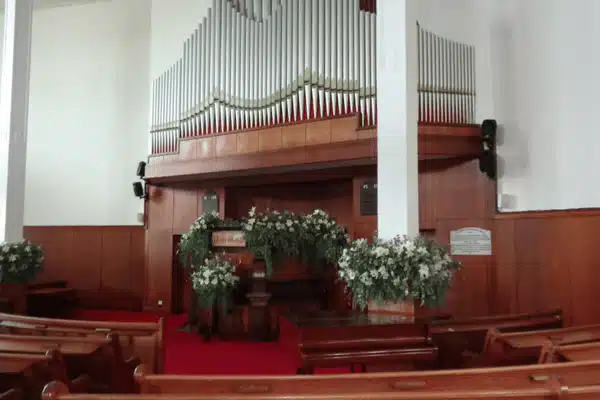
Everyone in your congregation should be able to hear clearly during worship. This is made possible with a proper church sound system installation. Everyone’s worship experience is improved by crystal-clear audio. Clear audio can improve the worship experience and help people stay engaged. Sound quality is important whether you’re holding a neighborhood event, a Sunday church service, or choir concerts. All the information you require to install a sound system that works well for your church is covered in this guide.
Table of Contents
Understanding Church Acoustics

Churches pose particular sound-related difficulties. Large open areas, hard walls, and high ceilings all cause issues. Echoes are produced when sound waves reflect off of objects. This makes it difficult to understand music and voices.
Key acoustic issues include:
- Excessive reverberation that muddles speech
- Dead zones where sound doesn’t reach
- Background noise from HVAC or traffic
- Hard surfaces that reflect sound waves
Words overlap when reverberation times exceed 1.5 seconds. This is exacerbated by high ceilings and stone walls. Balance is the aim. For music, you want warmth, but for spoken word, you want clarity.
Acoustic remediation is often the first step in installing a sound system in a church. Sound-absorbing panels reduce reflections. Diffusers help spread sound evenly. Aim for 1.2 to 2.0 seconds of reverb. Communication is more comprehensible when it is shorter. Slightly longer durations keep things warm for musical worship.
In an untreated space, even costly equipment sounds bad. Prior to purchasing expensive speakers, fix the acoustics. This produces better outcomes and saves money.
Planning Your Sound System
Even sound coverage throughout your sanctuary is guaranteed with careful design. There should be clear audio in every seat. There won’t be any dead zones or places with excessive noise.
Setting up speakers properly is essential. There may be a need for multiple speakers or arrays. More speakers are often required in areas below balconies. Far corners may require the use of delay speakers. These ensure that all hearing is clear and in harmony.
Planning considerations:
- Identify seating areas that need coverage
- Determine speaker types and placement
- Choose mixing console location
- Account for future growth
The mixing console ought to be positioned in the middle of the congregation. The operator can now hear what the crowd is hearing. Don’t tuck it into higher balconies or back corners. The main floor and those areas have different hearing characteristics.
Software for room modeling aids in forecasting the behavior of sound. Expert installers examine the wall materials, room shape, and ceiling height. This finds trouble spots before installation starts. It also directs the location and choice of speakers.
Careful preparation is necessary for a church sound system installation to be successful. Installing a sound system at a church is not the same as a sound system for home installation. Churches have more intricate requirements and bigger rooms. Expert analysis guarantees the success of your investment.
Essential Equipment Components
Essential Components
Microphones
For various uses, churches require different kinds of microphones. Pastors and worship leaders can use wireless handhelds.
Console for Mixing
All audio sources are managed by the mixer. Powerful features are available on contemporary digital consoles.
Amplifiers and Speakers
The size and design of the sanctuary influence the choice of speaker.
Assistive Listening Devices
About 15% of U.S. adults report some trouble hearing, according to the National Institute on Deafness and Other Communication Disorders.
The right equipment makes or breaks your sound system for home installation or church use. Each component must match your church’s size and worship style.
Microphones
For various uses, churches require different kinds of microphones. Pastors and worship leaders can use wireless handhelds. Hands-free convenience is provided by lapel or headset microphones. Overhead condensers could be used as choir microphones.
Select microphones with appropriate pickup patterns. The sound source is at the center of a cardioid pattern. They successfully block out background noise and feedback.
Console for Mixing
All audio sources are managed by the mixer. Powerful features are available on contemporary digital consoles. Preset sceneries for various services are kept in storage. Operation is made simpler using a tablet remote control.
Volunteer sound technicians can handle sophisticated services with the aid of digital mixers. They have instantaneous recollection and saving capabilities. Select a console that has enough channels to accommodate all of your inputs.
Amplifiers and Speakers
The size and design of the sanctuary influence the choice of speaker. There are two primary choices:
Single cabinets with wide-ranging sound patterns are point-source speakers. Economical for churches with low ceilings or smaller spaces.
Line arrays: A number of modules are suspended vertically. They project sound more uniformly and farther. Perfect for big churches with lots of seats.
Amplifiers need to supply enough power. The sound should be loud in the front but clear in the back. For modern worship bands, subwoofers amplify low frequencies.
Assistive Listening Devices
About 15% of U.S. adults report some trouble hearing, according to the National Institute on Deafness and Other Communication Disorders. Assistive listening systems serve this population. FM headphones, infrared systems, or hearing loops help. Some states require these systems by law in religious facilities.
These devices let attendees receive audio at comfortable volumes. It’s both good ministry and legal compliance.
Professional Church Sound System Installation Benefits
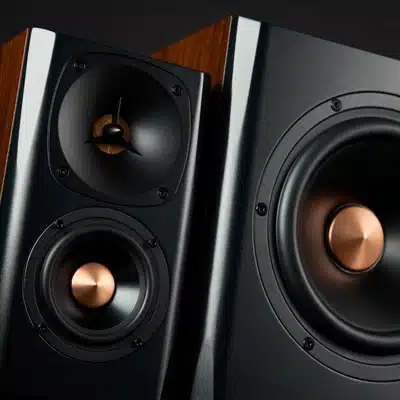
Professional installation of a sound system guarantees both safety and peak performance. Correct mounting, cabling, and calibration are handled by skilled installers.
Professional installation consists of:
- Use appropriate rigging to install speakers securely.
- Safe cable management and routing
- Calibration and tuning of the system
- Configuration of feedback suppression
- Connectivity to streaming devices
Inadequate church sound system installation leads to persistent issues. The right mounting hardware is required for heavy speakers. Power lines and audio cables must be kept apart. These specifics avoid safety risks, signal loss, and hum.
After installation, system calibration adjusts the sound. Technicians modify equalization using measurement instruments. They get rid of feedback problems and balance frequency response. Each seat has high-quality audio.
Nowadays, a lot of churches stream their services live. In 2024, Pushpay reported that 91% of churches livestream worship services. Clean audio feeds are set up for online audiences by qualified installers. Auxiliary mixes and appropriate interfaces are needed for this.
Long-term, DIY installations are frequently more expensive. Wiring or location errors subsequently need to be fixed by professionals. When you have to rerun the system, any initial savings are lost. Costly mistakes are avoided at the outset by professional expertise.
Training and Maintenance
Installing great equipment is just the beginning. Your team needs proper training to operate it effectively.
Operating a mixing console takes practice. Experts say it takes 6 to 12 months for volunteers to become competent. Break training into small lessons. Focus on one skill at a time.
Essential skills include:
- Changing the gain to avoid distortion
- Clarifying vocals with the use of EQ
- Smoothly combining several inputs
- Solving frequent problems
Your system continues to function properly with routine maintenance. Examine cables for any damage. Dust the vents on the equipment. Shared microphones should be cleaned. Make an appointment for yearly physicals with experts.
Exams by professionals identify problems early. The system is recalibrated and its performance is checked by technicians. They take care of any modifications and update firmware. Proactive maintenance guarantees dependability throughout time.
Maintain records of all configurations and wiring. This facilitates upcoming updates or troubleshooting. Your church can benefit for many years from a well-maintained system.
How much does church sound system installation cost?
Prices vary greatly depending on the size of the sanctuary and the caliber of the equipment. Basic systems could cost small churches anywhere from $5,000 to $15,000. Bigger churches with more complex requirements can spend at least $50,000.
Is it possible for us to set up a church sound system ourselves?
Even if it is feasible, do-it-yourself installations frequently have problems that need to be fixed by professionals. Common issues include improper speaker placement, poor acoustic treatment, and calibration issues. Installing a church sound system professionally usually results in long-term financial and headache savings.
What distinguishes speaker installation at a church from Home speaker installation?
Churches have more complicated requirements, bigger areas, and difficult acoustics. Smaller spaces and easier needs are usually covered by home speaker installation. Both must be positioned and calibrated correctly, but churches need more careful preparation.
How long does professional installation take?
Installation timeline depends on system complexity and church size. Simple systems might take a few days. Complex church sound system installation projects with extensive acoustic treatment can take several weeks.
Do we need assistive listening systems?
Congregants with hearing impairments benefit from assistive listening, yes. Adults with hearing loss make about 15% of the population. These systems are mandated by law in certain states for places of worship.
How frequently should our sound system be maintained?
Do routine upkeep on a weekly or monthly basis. Verify correct operation, clean the equipment, and inspect the wires. For comprehensive calibration, schedule yearly or biannual professional examinations.
Clear Audio Transforms Worship
Every service and occasion is improved with a well-installed church sound system. Every stage, from preparation to training, guarantees crystal-clear audio for the whole congregation. Improved participation and engagement make the investment worthwhile. Superior results that benefit your church for years are produced by skilled installation, high-quality equipment, and professional design.
Ready to Upgrade Your Church Sound System?
Don’t let poor audio limit your worship experience. Our team specializes in church sound system installation that delivers crystal-clear sound to every seat. We handle everything from acoustic analysis to equipment selection, installation, and training. Contact us today for a free consultation and discover how professional sound can transform your services.