
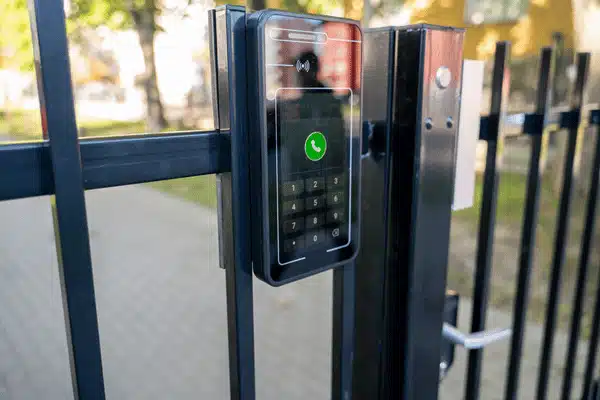
Choosing the right intercom for your home is more important than ever. Wireless home intercom systems now offer app control, video feeds, and smart home links. Traditional wired intercoms still deliver rock-solid reliability. But which one is right for your home? This guide breaks it all down so you can decide with confidence.
Ready to upgrade your home’s communication system? Get a free quote from My Custom Integrators today.
Table of Contents
How Wireless Home Intercom Systems Work
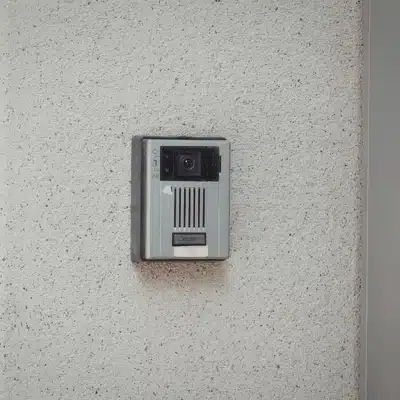
Wireless house intercom systems can be connected by cellular networks, RF waves, or Wi-Fi. An outdoor panel is connected to your smartphone or inside monitor via a router or cloud platform.
Key benefits:
- Easy installation with no wall wiring needed
- Remote access from anywhere via mobile app
- Simple expansion by adding more devices
Limitations to know:
- Dependent on a strong Wi-Fi signal
- Signal can degrade through thick walls
- Requires proper setup to stay secure
According to Reports and Data, wireless solutions now hold about 55% of new home intercom market share as of 2024. Demand is growing fast, driven by smart home adoption.
How Traditional Wired Intercoms Work
Physical cables, like Cat5e/Cat6 Ethernet or analog 4-wire, are used in a traditional residential intercom system to connect outdoor panels to indoor stations. Power often comes through Power over Ethernet (PoE), which sends electricity and data over the same cable.
Key benefits:
- Highly reliable with no signal interference
- Low latency for real-time audio and video
- Stronger physical security since there is no wireless signal to intercept
Limitations to know:
- Higher upfront installation cost
- Requires drilling and cable runs through walls
- Less flexible for retrofit projects
Brands like Aiphone and 2N are common in professional intercom home installations. My Custom Integrators works with these systems regularly.
Security and Privacy
This is where both systems differ most.
Wireless systems rely on Wi-Fi encryption (WPA3) and TLS/SSL protocols for video calls. Some offer end-to-end encryption. However, they are vulnerable to:
- Weak passwords
- Outdated firmware
- Wi-Fi jamming in rare cases
Wired IP systems also use TLS and SRTP for encrypted streams. Because there is no wireless signal, they are harder to intercept at the physical layer.
Best practice for both: Use strong passwords, enable device encryption, and segment your intercom on a separate network.
Cloud-based wireless systems may store video remotely. Always review a vendor’s data and privacy policy before buying.
Cost Breakdown
Cost is often the deciding factor for intercom systems for home buyers.
Wireless often costs less in Year 1. But monthly cloud fees add up. Wired costs more upfront but has lower ongoing expenses. Over five years, total costs often come close.
Smart Home Integration
Wireless intercom home systems are built for smart home setups. Most connect to Alexa, Google Home, or Apple HomeKit right out of the box. Many support IFTTT and open APIs for deeper automation.
Wired IP systems can also integrate with platforms like Control4 or Crestron. They use protocols like SIP and ONVIF. This setup is more powerful but requires a skilled installer.
If you already have smart locks or voice assistants, a wireless system may plug in with minimal effort. For a fully custom whole-home setup, wired systems offer more long-term control.
Explore My Custom Integrators’ intercom and home automation solutions.
Which System Is Right for You?
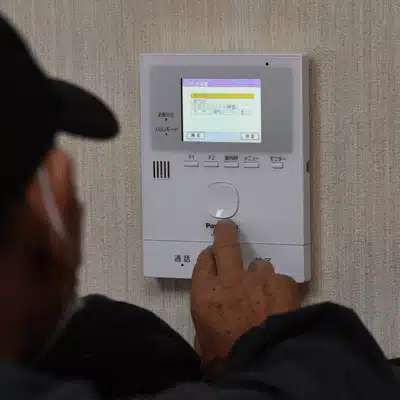
Here is a simple way to choose:
Choose wireless if you:
- Are retrofitting an existing home
- Want smartphone access and app control
- Have a smaller home or apartment
- Prefer a DIY-friendly install
Choose wired if you:
- Are building new or remodeling
- Need coverage over large distances
- Want maximum reliability and zero interference
- Have a luxury or multi-zone home setup
A hybrid approach works well too. Use a wired backbone at entry points and wireless monitors inside. This gives you the best of both worlds.
| Feature | Wireless Home Intercom Systems | Traditional Wired Intercoms |
| Installation | Easy, no wiring needed; DIY-friendly | Complex; requires cabling and professional install |
| Reliability | Depends on Wi-Fi signal strength | Very reliable; no signal interference |
| Cost | Lower upfront, possible ongoing fees | Higher upfront, lower long-term cost |
| Flexibility | Easy to expand and relocate | Fixed setup; harder to modify |
Are wireless home intercom systems secure?
Yes, when set up correctly. Modern wireless intercoms use WPA3 Wi-Fi encryption and TLS for video. Always use strong passwords and keep firmware updated to stay protected.
Is it possible to connect an intercom to my smart lock?
APIs or IFTTT are often used to connect wireless IP intercoms to smart locks, cameras, and voice assistants. Wired IP systems can also work together, but they may need extra controllers to do so.
What do I do if my Wi-Fi goes down?
Cloud-based wireless intercoms lose their remote functionality when the power goes out. The indoor monitors continue to ring since some have a local fallback. Ethernet-based wired intercoms are unaffected by internet interruptions.
What is the range of a wireless intercom?
Wi-Fi doorbells usually operate through walls between 30 and 100 feet from a router. RF-only intercoms have a line-of-sight of up to 1,000 feet. Wi-Fi range can be greatly increased with mesh extenders.
Which costs more over time?
Wireless usually costs less upfront. But subscription fees over five or more years can close the gap with wired. For large homes, wired is often more economical long-term.
What is PoE and why does it matter?
PoE stands for Power over Ethernet. It sends power and data through one cable. Wired intercoms using PoE are easier to install cleanly and stay online during power dips if connected to a UPS backup.
The Bottom Line
Both wireless home intercom systems and traditional wired intercoms offer clear advantages, but the best choice comes down to how your home is built, how much flexibility you want, and how you expect the system to perform over time. Working with an experienced installer can make that decision much easier, especially when the system needs to fit into a larger smart home or security setup.
My Custom Integrators has that level of knowledge and skill. Since 2009, the company has been designing and installing intercom and video intercom systems for homeowners in Central Texas. They can make systems that work for both new and existing homes. Our team also handles smart home integration, which makes the setup more connected and reliable from the start.
Instead of guessing which setup will work best, schedule a free estimate with My Custom Integrators and get a residential intercom system designed around your home, your routine, and your long-term needs.