
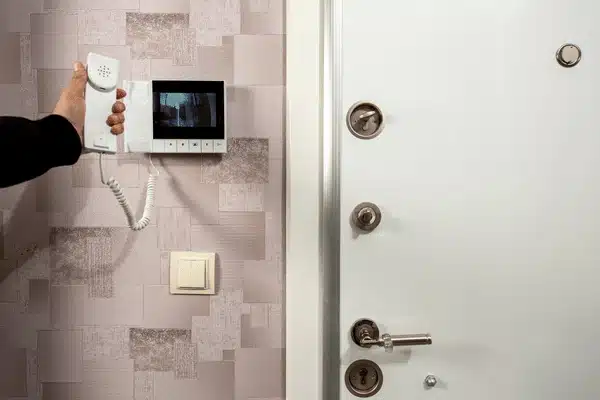
Not sure whether to go wired or wireless for your home intercom? You are not alone. It is one of the more common questions homeowners wrestle with, and the honest answer is that it depends on your home, your network, and what you actually need the system to do.
Wireless home intercom systems have come a long way. They are easier to install, work with your smartphone, and do not require opening up walls. Wired systems, on the other hand, are still the gold standard for performance, scale, and long-term reliability. Both have a place. Knowing which one fits your situation is the whole point of this guide.
Table of Contents
Why Wireless Home Intercom Systems Are So Popular

Here is the thing about wireless: it removes the part of the project most homeowners dread. Nobody wants to pull permits, patch drywall, or fish cable through finished walls just to see who is at the front door.
Wireless home intercom systems sidestep all of that. Many connect directly to your phone. Some run on rechargeable batteries. Others pull a trickle charge from your existing doorbell wiring, or use a small solar panel to cut down on how often you need to charge.
Wireless is usually the right call if you are:
- In an apartment, condo, or smaller home
- Upgrading an existing home without opening walls
- Renting and need something removable
- Focused on a single front door or entry point
The catch is that wireless performance is only as good as your home network. Weak signal, dead zones, and older routers all create problems you will feel every time someone rings the bell. Cisco notes that signal degrades with distance from the router, and that better Wi-Fi standards like 6E and 7 improve capacity and latency but do not fix poor coverage.
A wireless residential intercom system needs a solid network behind it. Without that, the convenience factor fades fast.
When Wired Systems Are the Better Choice
If your walls are already open, or you are planning a new build or major remodel, wired is worth doing right. Power over Ethernet (PoE) is the cleanest approach. One cable handles power and data, which simplifies everything and eliminates battery management altogether.
Wired tends to be the stronger choice when:
- You have more than one entrance point, such as a gate, garage, or side door.
- You want interior stations on various floors of the home.
- Low latency is critical, especially for real-time video and two-way interaction.
- You integrate with locks, gates, or a larger smart-home system.
- Aesthetics are important, as flush-mount connected circuitry appears more deliberate.
Wired systems also handle growth better. Adding a second or third station, tying in gate access, or connecting to a home automation platform is far more predictable on a wired backbone than over Wi-Fi. That predictability is exactly what larger and more complex homes need.
Cost, Security, and Maintenance Differences
What actually drives the total cost:
- The gadget and any other stations or hardware
- Installation labor and rewiring if necessary
- Cloud video subscriptions allow for remote access.
- Battery replacements or regular charging over time
Security deserves more attention than most buyers give it. Wireless devices have a wider exposure surface, especially if your router password has not been changed since the day it was installed. But wired devices are not immune either. Both need regular firmware updates, strong passwords, and smart network configuration.
Before you buy anything, ask the vendor about their update support window, encryption standards, MFA options, and whether footage is stored locally or in the cloud. The FCC Cyber Trust Mark is a good starting point for identifying products that meet a basic security standard.
Best System Type by Home Size and Layout
Here is a straightforward breakdown by home type:
| Home Type | Best Pick | Why |
| Apartment or condo | Wireless | Minimal disruption, easy setup |
| Small single-story retrofit | Wireless | Works well with good Wi-Fi coverage |
| Two-story family home | Wireless or hybrid | Depends on entry points and network |
| New build or remodel | Wired PoE | Simple to run cable while walls are open |
| Large or luxury home | Wired or hybrid | Better scale, cleaner finish |
| Gated or multi-entry property | Wired PoE | Consistent gate and lock control |
Should You Choose a Hybrid Setup?
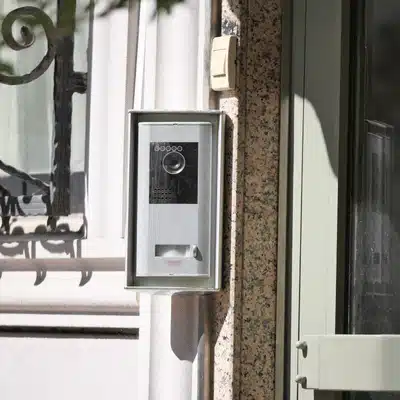
For many households, hybrid is where the debate ends, and for good reasons. You wire the most important access points, and then deploy mobile apps and wireless add-ons where convenience outweighs infrastructure.
As a result, the system has a robust yet flexible feel. Because your front door and gate are wired, they function consistently. Because the app layer is placed on top, your family can respond from any location. And if a newer wireless device becomes available that you wish to include, you are not restricted from doing so.
Why a lot of homeowners land on hybrid:
- Stable performance at the most important entries.
- App-based answering and alarms without additional hardware.
- Room to improve or extend without having to start anew.
- A finished, deliberate look where it matters.
Are wireless home intercom systems reliable enough for large homes?
They can be effective, but only when there is adequate Wi-Fi coverage throughout the home. For properties with many entry, weak signal locations, or gate access requirements, a wired or hybrid residential intercom system is typically the more reliable option.
Is a wired intercom more secure than a wireless one?
Wired removes one layer of wireless vulnerability, but neither is secure by default. Good passwords, regular firmware updates, and adequate network configuration are essential for any intercom house system.
Do wireless intercoms stop working when the internet goes down?
Most of the time, yes. Remote access, app alerts, and cloud video all depend on your internet connection. Some units still ring locally, but the smart features pause until your connection comes back.
Is PoE better than battery power for a long-term install?
For anything permanent, yes. PoE keeps the device powered and connected through a single cable, which removes the charging cycle and makes the residential intercom system easier to maintain over time.
Should I wire for an intercom during new construction?
Without question. When the walls are open, running Cat6 to your entry points costs very little relative to the value it adds. Doing it later means more labor, more disruption, and more cost.
Can a home intercom connect to smart locks and a full automation system?
Yes, and it works best when the whole system is planned together from the start. Many wired and hybrid setups tie directly into locks, gates, lighting, and cameras. Our home automation installation services are designed to bring all of that together cleanly.
One Last Thought
Wireless is the easier install, wired gives you stronger long-term infrastructure, and hybrid often works best when a home needs both flexibility and reliable performance. My Custom Integrators brings experience in home intercom design, video intercom installation, wiring, and smart-home integration, with customizable systems for residential and commercial properties since 2009. Their team helps Central Texas homeowners plan systems around the property’s layout, entry points, network, and daily use instead of forcing a one-size-fits-all setup.
Get a home intercom system built for the way your property actually works. Schedule a free estimate with My Custom Integrators today and get expert guidance on the right wired, wireless, or hybrid setup for your home.