
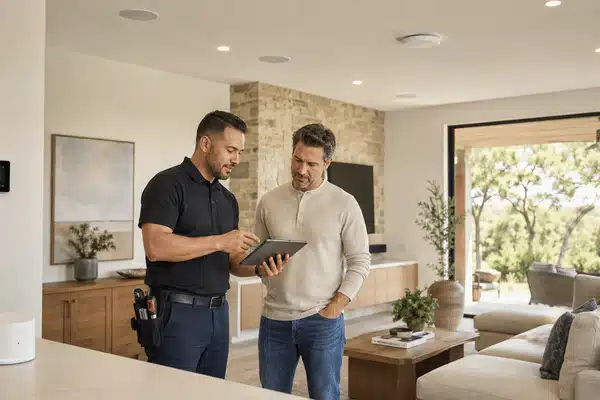
According to a 2026 poll conducted by ConsumerAffairs and the American Smart Home Buyers (ASHB), over 77 million homes in the United States now have smart gadgets. That number continues to rise. However, having the correct equipment means nothing unless it is installed by a qualified home automation installer. A qualified professional provides system design expertise, certified training, and practical assistance. If you choose the wrong one, you’ll end up with dead zones, broken integrations, and an increasing bill. This guide demonstrates how to tell the difference.
Table of Contents
Why the Right Installer Matters
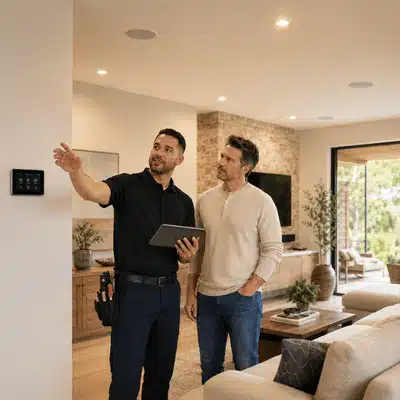
The global smart home market hit $147.5 billion in 2025, according to Fortune Business Insights. It is projected to reach $180.1 billion in 2026. That kind of growth means more installers entering the space, and not all of them are qualified.
A professional home automation installer does more than plug in devices. They design a system around your home, your habits, and your budget. They plan your network, wire for future upgrades, and stay on call after install day.
Home automation installation services from a certified provider also protect your investment. CEDIA (Consumer Electronics Design and Installation Association) sets the standard for training and ethics in this industry. Certified installers follow proven processes. They document every system, train homeowners, and offer structured support.
DIY setups and unqualified contractors often skip these steps. That means more callbacks, more costs, and more frustration.
Key Factors to Consider When Hiring
Define Your Goals and Budget First
Know what you want before making any calls. Common goals include:
- Security – cameras, locks, sensors
- Lighting control – automated scenes and schedules
- Entertainment – whole-home audio or sound system installation
- Energy savings – smart thermostats and shading
A clear scope helps every home automation installer give you an accurate, honest quote.
Check Credentials and Experience
Look for these qualifications:
- CEDIA accreditation or membership
- Manufacturer certifications (such as Control4 Pinnacle dealer status)
- Years in business and completed project count
- A portfolio of past installs
Home technology integrators with formal training understand system design at a deeper level. They do not guess. They plan.
Read Reviews and Ask for References
Check Google reviews and industry trade websites. Then ask the installer for client references. A confident professional will share them without reluctance. If they avoid the question, it is a warning indication.
Evaluate Communication and Support.
Before hiring them, make sure they can communicate effectively. Do they answer queries clearly? Do they respond quickly?
A good home automation installer explains your options in plain language. After the job is done, they provide:
- System documentation.
- Homeowner training.
- Service agreement or warranty
Verify Network Planning and Technical Depth
A smart house operates on your network. Ask every installer:
- How many access points are you considering?
- Will you use wired Ethernet to connect critical devices?
- How do you deal with interference and dead zones?
Home technology integrators with true competence handle network design as the first step, not as an afterthought. Sound system installation, video dissemination, and security cameras all require a reliable connected infrastructure.
Confirm Compatibility and Scalability.
Your system should evolve alongside you. Inquire whether the installer works with open platforms such as Control4 or Matter-compatible devices. These ecosystems allow you to gradually add rooms, devices, and features, rather than beginning from zero.
Red Flags and Costly Mistakes to Avoid
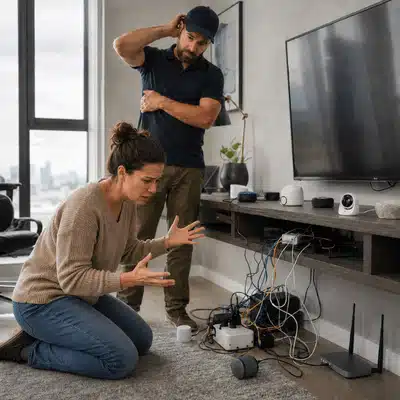
Watch for these warning signs during your search.
No site survey before quoting. A flat quote without seeing your home is a guess. Every real home automation installer will schedule a walkthrough first.
One-size-fits-all packaging. Generic packages disregard your layout, habits, and aspirations. Home automation installation services should be individualized rather than off the shelf.
Weak network planning. An installation that suggests a simple consumer router for a multi-room system is cutting corners. A suitable plan consists of managed access points, wired backbone connections, and interference mitigation.
Incompatible gadgets were put together. Mixing brands without a central controller causes systems to fail, clash, or stop working after upgrades.
High-pressure sales or no qualifications. Legitimate home technology integrators are happy to show you their certificates, provide references, and give you time to make your decision. Pressure to sign fast raises a red flag.
No insurance. Always ask for proof of liability and professional indemnity insurance. Without it, any damage during install becomes your problem.
Verbal-only quotes. Every reputable provider gives written proposals. If equipment models, warranties, and labor costs are not spelled out, you have no protection.
Cutting corners on sound system installation. Audio is one of the most common areas where shortcuts show up fast. Poor cable runs, wrong impedance matching, or no acoustic planning leads to systems that sound bad from day one.
What certifications should a home automation installer have?
Look for CEDIA certification and manufacturer-specific training, such as Control4 Pinnacle Dealer designation. These credentials demonstrate that the installer adheres to industry standards for design, installation, and continuing support.
How can I compare quotes for home automation installation services?
Request that each installer provide a detailed breakdown of the equipment, labor, and warranty details. Avoid quotes that do not include itemized costs. At least two to three quotes provide a reasonable basis for comparison.
Do I need home automation installation services for a small setup?
Professional planning benefits all systems, including the smallest. A certified installer guarantees that your devices operate together, your network can handle the load, and your system can scale as your needs change.
What is included in the sound system installation?
Proper sound system installation includes speaker placement, cable runs, amplifier sizing, acoustic treatment, and calibration. Home technology integrators with audio skills will tailor the system to your specific room rather than simply connecting the wires.
How long does a full smart home installation take?
It depends on project size. A basic setup may take one to two days. Larger homes with full lighting control, security, and entertainment integration can take one to two weeks, especially when coordinating with builders or electricians.
What should I expect after the installation is complete?
Your installer should provide full system documentation, a hands-on training session, and a clear warranty or service agreement. Ongoing support should be available if devices need updates or new gear gets added.
Ready to Get Started?
Choosing the right home automation installer protects your investment, and Custom Integrators brings the right mix of credentials, experience, and long-term support to the job. As a Control4 Pinnacle status dealer serving Central Texas since 2009, their in-house team brings more than 20 years of combined system design and home automation experience across Control4 systems, home theaters, audio, intercoms, and smart home upgrades.
Schedule your free estimate with Custom Integrators today and start building a smart home system that works exactly the way your family lives.