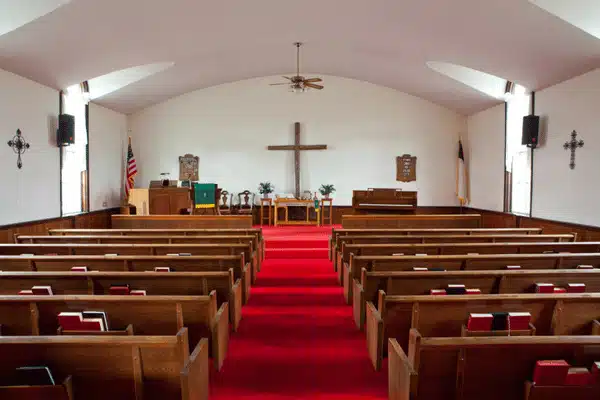
The pastor starts speaking, but people at the back can barely make out the words. Meanwhile, the worship band sounds much louder near the front. Both problems can come down to how the speakers are set up. A good church sound system installation should make sermons and music easy to hear throughout the room.
Table of Contents
Buying Cheap Equipment to Save Money
Saving money on sound equipment makes sense, especially for smaller churches. But buying the cheapest speakers or microphones often leads to poor sound and early replacements.
Spend more on the equipment your church uses most. Good microphones, reliable speakers, and a suitable mixer should come first.
Church Sound System Installation Packages by Church Size
Not every church needs a large sound system. A small chapel has different needs from a sanctuary with 500 seats and a full worship band.
Here’s a rough idea of what churches can expect to spend.
| Church Size | Estimated Budget | Typical Equipment |
| Small (under 100 seats) | 5,000–10,000 | Two speakers, basic mixer, microphones, cables |
| Medium (100–300 seats) | 15,000–30,000 | Main speakers, subwoofer, digital mixer, stage monitors |
| Large (300+ seats) | 40,000–100,000+ | Multiple speaker zones, advanced mixer, wireless microphones, stage boxes |
These are sample planning ranges, not fixed prices. The room layout, wiring needs, and equipment choices affect the final cost.
What Does a $20,000 Church Sound System Include?
Say your church has $20,000 to spend. You’ll need to set aside money for the equipment itself and the people who’ll install it. Here’s what that budget might look like:
- $6,000: Main speakers and a subwoofer
- $3,000: Digital mixer for the sound team
- $2,500: Microphones and DI boxes for instruments
- $2,000: Monitors for the worship band
- $2,000: Speaker mounts, cables, and other parts
- $4,500: Labor, sound checks, and volunteer training
Acoustic panels and video equipment aren’t covered in this example.
Skipping Professional Installation
Buying good speakers is one thing. Getting them to sound right inside a church is another.
Poor wiring can cause buzzing, while badly mounted speakers can become a safety risk.
An experienced installer can handle the wiring, speaker placement, and sound checks. This also gives volunteers a system that’s easier to use.
Ignoring Room Acoustics
This is the most underestimated mistake in church sound system installation. Churches often have challenging spaces with high ceilings, Have you ever heard a pastor’s voice linger after they’ve finished a sentence? That’s a common issue in churches with tile floors, bare walls, or high ceilings. The sound keeps bouncing around the room. Raising the volume won’t make those words any clearer.
Signs of acoustic problems:
- The pastor’s words echo, making parts of the sermon hard to follow.
- Music sounds clear near the stage but becomes muffled toward the back.
- Microphones make a loud squealing noise when the volume goes up.
How to avoid it:
Have someone speak from the pulpit while you listen from different seats. Pay attention to where words become hard to understand.
The rear wall, side walls, or ceiling may need acoustic panels. Find the trouble spots before spending money on treatment.
Do we really need acoustic treatment in our sanctuary?
Some churches sound fine without extra treatment. Others have so much echo that even good speakers struggle. A room assessment can show whether acoustic panels would help.
Signs of acoustic problems:
- Excessive echo or reverberation
- Certain frequencies cause feedback
- Uneven sound (some areas too loud, others can’t hear)
How to avoid it:
- Assess your room’s acoustic profile before buying equipment
- Add acoustic panels, curtains, or ceiling tiles to absorb sound
- Use carpet or padded pews to reduce reflections
- Work with an acoustic expert during building or renovation
Poor Speaker Placement
People sitting near the stage shouldn’t have to cover their ears just so the back rows can hear.
Where the speakers hang matters as much as their volume. They need to point toward the seats, not across bare walls or up at the ceiling.
For a deep sanctuary, extra speakers near the back may help. They must be timed correctly so people don’t hear the same words twice.
Not Planning for Growth

Your church might have three singers today and a full worship band next year.
Choose equipment with enough spare inputs and outputs. It’s usually cheaper than replacing an undersized mixer later.
How to Choose an Audio Mixer for Church Bands and Livestreaming
Start by counting everything that needs a microphone or audio input. Include singers, drums, guitars, keyboards, and the pastor.
Don’t stop at the number of channels. Think about what happens during an actual service.
- Inputs: If 16 channels are already in use, a 24-input mixer gives you some breathing room.
- Monitor mixes: Musicians may want different sounds in their stage monitors.
- Livestream outputs: The online audience needs its own mix, not just the room audio.
- Saved settings: Keep past mixer settings ready for each worship team.
- Ease of use: Volunteers should be able to find basic controls without much trouble.
For churches that stream services, a separate broadcast mix is worth planning for. Shure’s church audio guidance also supports keeping livestream sound needs separate from the room mix.
Failing to Train Your Team
A new mixer can be confusing, even for volunteers who have helped with sound before.
Let at least two people practice using it during a rehearsal. They should know what to check when a microphone goes quiet or starts squealing.
Before Sunday worship begins, have the team test the microphones, check batteries, and load the right mixer settings.
How much should a church sound system cost?
A small church can budget around $5,000 to $10,000 for a basic installed setup. Larger worship bands need more microphone inputs, speakers, and stage monitors. New wiring or acoustic treatment can add quite a bit to the bill.
What equipment is included in a $20,000 church sound package?
A $20,000 package can cover speakers, a digital mixer, microphones, stage monitors, and cables. Part of that budget should also go toward installation and sound tuning. Ask for a detailed quote so you know what’s included.
How do I choose the right audio mixer for a church band?
Start with the number of singers and instruments your church normally has during worship. Each one may need its own input on the mixer. It’s also worth having a few extra channels for visiting musicians. For livestreams, choose a mixer that lets you control the online audio separately from the sound in the church.
What are the best acoustic panel placements for high-ceiling sanctuaries?
The rear wall is often worth checking first, especially when words echo back toward the congregation. Side walls and ceiling clouds may also need attention. Walk through the sanctuary during a sound test to find where the echoes are worst.
Can volunteers install our church sound system?
Yes, there’s plenty they can help with. Setting up microphone stands, plugging in cables, and testing sound levels are all reasonable tasks for trained volunteers. But speakers hanging above people’s heads need secure mounts. Leave that work, along with permanent wiring, to qualified installers.
What causes feedback in church sound systems?
That sharp ringing sound happens when a microphone picks up sound from a speaker. It often gets worse when microphones are too close to speakers or the volume is too high. Moving equipment and adjusting the mixer can help stop it.
How often should we maintain our sound equipment?
Give the microphones a quick test before Sunday worship. Check the batteries too, since one dying battery can interrupt a sermon. Every so often, look over the cables and plugs for wear or damage. Have a qualified technician check overhead speakers and other mounted gear.
Should we plan for livestreaming when installing our sound system?
Yes, even if your church isn’t streaming yet. Planning ahead makes it easier to add cameras and a separate audio feed later. A dedicated livestream mix also helps online viewers hear both the pastor and worship band.
Good church audio shouldn’t leave people straining to hear the sermon. With proper equipment, speaker placement, and training, every seat can have a better listening experience. Need help planning your setup? Get a quote from Custom Integrators and find out what works for your church.