

Smart home technology has become a common part of new home construction. Homeowners increasingly want lighting, security, entertainment, climate control, networking, and other systems to work together rather than operate through a collection of separate apps.
That is where home technology integrators come in. These professionals plan, install, configure, and connect home technology so the finished system is easier to manage.
Table of Contents
What is a Home Technology Integrator?
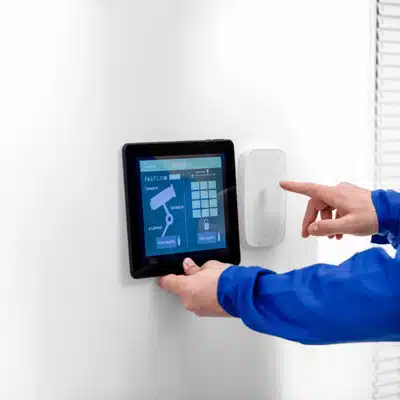
A home technology integrator coordinates the technology throughout a house. Instead of hiring different companies for networking, security, audio, automation, and other systems, homeowners can work with one team responsible for making those technologies function together.
Their work commonly includes:
- Designing systems around the homeowner’s needs
- Installing low-voltage wiring and equipment
- Programming devices and controls
- Testing system performance
- Teaching homeowners how to use the system
- Providing ongoing technical support
The goal of professional home automation installation is to create one connected environment instead of a collection of unrelated smart devices.
Key Systems Integrators Install
Here’s what custom home technology integration typically includes:
Home Networking
Your network forms the backbone of every smart feature. Integrators run Ethernet cables during construction and install enterprise-grade Wi-Fi.
Smart Lighting and Climate
Top request: Lighting controlLighting control ranks as the top request from homeowners, with 40% of designers citing it as most in-demand.
Security and Surveillance
Home technology integrators tie security into your entire system. They install cameras, smart locks, video doorbells, and alarms that work together.
Audio and Entertainment
Whether you want a theater or music in every room, integrators set up distributed audio and unified control. One app manages your streaming services and music library across all rooms.
Custom home technology integration can cover several systems throughout a new house.
Home Networking
A reliable home network supports nearly every connected device in a modern smart home.
During construction, integrators can install Ethernet cabling, wireless access points, networking hardware, and other infrastructure while the walls are still accessible. Good planning helps provide dependable connections for streaming, video calls, security cameras, automation devices, and other technology.
Smart Lighting and Climate
Lighting controls can include smart switches, dimmers, keypads, occupancy sensors, schedules, and automated scenes.
Climate systems can also connect with home automation. A thermostat, for example, may automatically adjust based on schedules, occupancy, or a homeowner’s preferred settings.
Security and Surveillance
Home technology integrators can bring security devices into the wider automation system.
Depending on the project, this may include:
- Security cameras
- Smart locks
- Video doorbells
- Alarm systems
- Motion sensors
- Remote notifications
Integration allows these devices to interact. An alarm event, for example, could trigger lighting changes or send alerts to the homeowner.
Audio and Entertainment
Integrators can design home theaters, distributed audio systems, television installations, and whole-house entertainment systems.
Instead of controlling every room separately, homeowners may be able to manage music, television, streaming services, and other entertainment from one interface.
The same central platform can often provide access through touchscreens, mobile devices, remotes, or compatible voice-control systems.
Why Integrate During Construction?
New construction is one of the easiest times to plan a home technology system.
When walls and ceilings are open, installers have greater flexibility when running Ethernet, speaker, security, control, and other low-voltage wiring. This can reduce the need to open finished walls later.
Early planning also allows home technology integrators to coordinate with builders, electricians, designers, and other trades.
An integrator can identify where the home may need:
- Additional wiring
- Equipment racks
- Wireless access points
- Speakers
- Cameras
- Keypads
- Television locations
- Power outlets
- Structural backing for mounted equipment
Planning these details before drywall goes up can produce a cleaner installation and make future upgrades easier.
Benefits for Homeowners

Simplicity and Control
One of the biggest benefits of professional integration is having several home systems accessible from a common interface.
An automated “Away” scene, for example, could turn off selected lights, adjust the thermostat, lock compatible doors, and arm the security system with one command.
Expertise and Security
Professional integrators understand networking, hardware compatibility, installation practices, and system programming.
They can also configure devices and networks with security in mind instead of relying entirely on factory-default settings.
Ongoing Support and Future-Proofing
Home technology changes over time.
A professionally designed system can account for future expansion by providing additional wiring, network capacity, rack space, or other infrastructure.
Integrators can also assist when homeowners want to update software, troubleshoot equipment, or add new devices.
Increased Home Value
Integrated technology may also make a property more attractive to buyers who value connected lighting, entertainment, networking, climate, and security features.
Actual resale value varies considerably depending on the property, market, quality of the installation, and technology included.
What’s the difference between an integrator and an electrician?
Electricians primarily work with electrical power and high-voltage systems such as outlets, circuits, panels, and electrical wiring.
Home technology integrators generally focus on low-voltage technology such as networking, audio, video, automation, surveillance, and control systems. They also configure and program devices so different technologies can operate together.
How much does professional integration cost?
There is no single price for professional smart home integration.
Costs depend on the size of the property, number of rooms, wiring requirements, equipment selected, automation platform, audio and video systems, security features, and the amount of programming involved.
A smaller installation may involve only networking or entertainment, while a whole-home automation project can require significantly more equipment and labor.
Can I add features after construction?
Yes.
Technology can be added to an existing home, although some upgrades may require more installation work once walls and ceilings are finished.
Planning wiring and infrastructure during construction can make future additions easier and reduce the amount of retrofitting required.
Do I need an integrator for DIY devices?
Not necessarily.
DIY devices can be practical when installing a small number of standalone products. Complexity increases when lighting, networking, audio, security, climate control, and other systems need to communicate reliably.
A professional integrator can handle system design, compatibility, installation, programming, troubleshooting, and ongoing support.
Will my smart home work with future devices?
No technology platform can guarantee compatibility with every future product.
However, professional integrators can design systems with expansion in mind. That can include additional wiring, network capacity, equipment space, and platforms that support a broad selection of compatible devices.
What specific smart locks are compatible with Control4 intercoms?
Control4 can integrate compatible smart locks with a broader home automation and intercom setup. Yale is one established option, with Control4 drivers available for products including certain Yale Assure, nexTouch, Doorman, and Z-Wave locks.
Exact compatibility depends on the lock model, communication protocol, Control4 software version, and available driver. Homeowners should therefore confirm a specific lock with their Control4 integrator before purchasing it.
How does professional installation compare to a DIY setup process?
DIY installation can be suitable for a few standalone devices, but whole-home systems involve more planning.
A professional installer can handle network design, low-voltage wiring, equipment installation, compatibility checks, programming, testing, and homeowner training. This is particularly useful when lighting, entertainment, security, smart locks, cameras, and automation need to work as one system.
Professional Control4 installations are also configured through authorized Control4 professionals rather than being designed as a completely DIY automation platform.
What are the monthly subscription costs for cloud video storage?
Cloud video costs depend on the equipment and Control4 services included with the system.
For newer Control4 systems, the Control4 Connect service provides remote and cloud-connected functionality. Features available with compatible equipment can include Intercom Anywhere and cloud storage for recordings or snapshots from devices such as the Control4 Chime video doorbell.
Because subscription structures and pricing can change, homeowners should confirm the current Control4 Connect price and included storage with their integrator before installation.
Does Custom Integrators offer free quotes for Waco residents?
Custom Integrators serves Waco and other communities throughout Central Texas. Homeowners can contact the company to discuss a proposed smart home, networking, audio, security, or other technology installation and request an estimate based on the scope of the project.
Home technology integrators help turn individual devices into a coordinated home system.
When networking, lighting, security, climate, audio, video, and automation are planned together, technology can become easier to control and less intrusive.
For new construction, bringing an integrator into the project early also provides more opportunities to plan wiring, equipment locations, networking infrastructure, and future expansion before finishes are installed.
Homeowners building in Waco or elsewhere in Central Texas can contact Custom Integrators to discuss their home technology needs and get recommendations for an appropriate system.